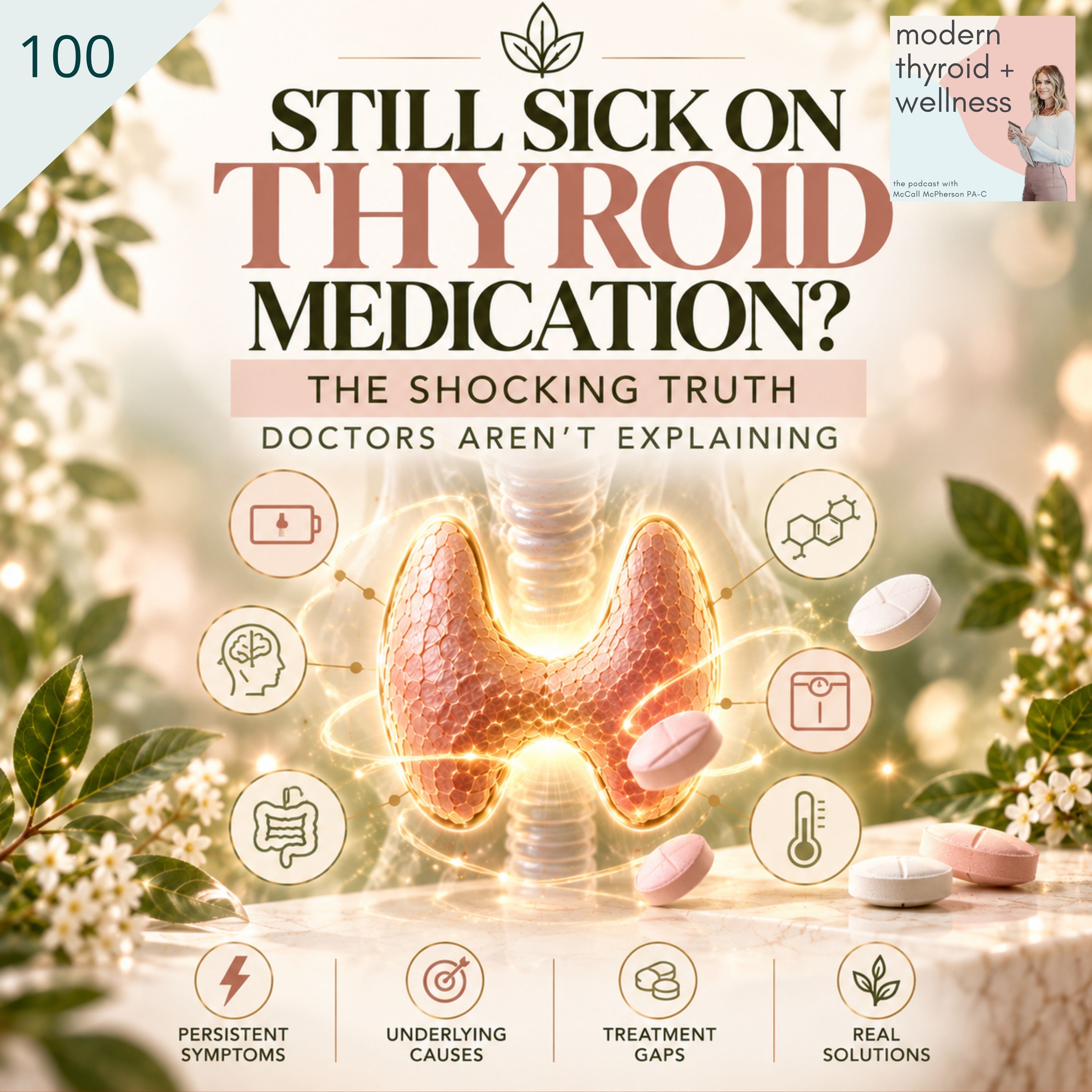
If you have been told your thyroid labs are “normal” but you still feel exhausted, foggy, inflamed, or stuck in a body that does not respond, you are not imagining it.
In a powerful episode of Modern Thyroid and Wellness, McCall McPherson sits down with Elle Russ, bestselling author of The Paleo Thyroid Solution, to unpack why so many people with hypothyroidism and autoimmune thyroid disease continue to suffer despite being diagnosed and treated.
This conversation is not about quick fixes. It is about understanding why conventional thyroid care often fails and what actually leads to symptom resolution.
Most thyroid patients enter the healthcare system hopeful, only to leave feeling dismissed.
Why?
Because modern thyroid care is still largely guided by outdated frameworks that prioritize lab numbers over lived experience.
Doctors are often taught to:
• Rely almost exclusively on TSH
• Treat lab ranges, not symptoms
• Avoid suppressing TSH at all costs
• Assume lingering symptoms are unrelated to the thyroid
As Elle explains, these approaches leave countless patients under-treated or misdiagnosed, especially those with autoimmune thyroid disease.
One of the most important themes of this episode is the dangerous misunderstanding of the word normal.
Reference ranges were designed to identify disease, not define optimal function.
Many patients experience:
• Fatigue and brain fog
• Weight gain resistant to diet and exercise
• Depression and anxiety
• Infertility or menstrual issues
• High cholesterol and blood pressure
All while being told their labs look fine.
As McCall and Elle emphasize, thyroid symptoms are not psychological or coincidental. They are physiological signals being ignored.
Another major issue discussed is the oversimplification of thyroid hormone replacement.
Many patients are placed on T4-only medication and told that should be enough.
But thyroid physiology is more complex.
The conversation explores:
• The difference between T4 and T3
• Why conversion issues are common
• How reverse T3 can block symptom improvement
• Why timing and dosing matter
• Why some patients do better on combination therapy
Elle shares her own experience of years of trial and error before discovering what her body actually needed.
When thyroid dysfunction is not properly addressed, the body compensates in unhealthy ways.
Patients are often prescribed:
• Antidepressants
• Cholesterol medications
• Blood pressure drugs
• Fertility treatments
Without anyone asking whether the thyroid is the root cause.
As discussed in the episode, treating downstream symptoms without correcting thyroid function only compounds the problem.
A central message of this conversation is empowerment.
Elle Russ did not heal because someone finally saved her. She healed because she educated herself and learned how her body actually worked.
This episode reinforces a critical truth:
No one will advocate for your health the way you can.
Understanding your labs, symptoms, and options is not confrontational. It is essential.
According to McCall and Elle, optimal thyroid health means:
• Symptoms are resolved, not tolerated
• Energy and cognition return
• Weight stabilizes naturally
• Mood improves
• Labs align with how you feel
It does not mean living with chronic fatigue and being told that is just how it is.
This conversation offers validation to millions of people who have been dismissed, gaslit, or told to accept feeling unwell.
It also offers hope.
Thyroid dysfunction is not a life sentence. With proper education, individualized care, and informed advocacy, full symptom resolution is possible.
If you have ever been told:
“Your labs are normal.”
“Your symptoms are unrelated.”
“This is just part of aging.”
This episode is for you.
Your body is not broken.
The system is incomplete.
And better thyroid care is possible.