Thyroid eye disease can be one of the most confusing and emotionally challenging complications of thyroid disorders. While many people associate thyroid conditions with fatigue, weight changes, or heart symptoms, fewer realize that the immune system can also target the tissues around the eyes.
In this episode of Modern Thyroid and Wellness, host McCall McPherson sits down with Dr. Sean Paul, a fellowship-trained oculoplastic and orbital surgeon, to explain what thyroid eye disease really is, why it happens, and what evidence-based treatments are available today.
This blog breaks down the key insights from the conversation and answers the most common questions patients are searching for online.
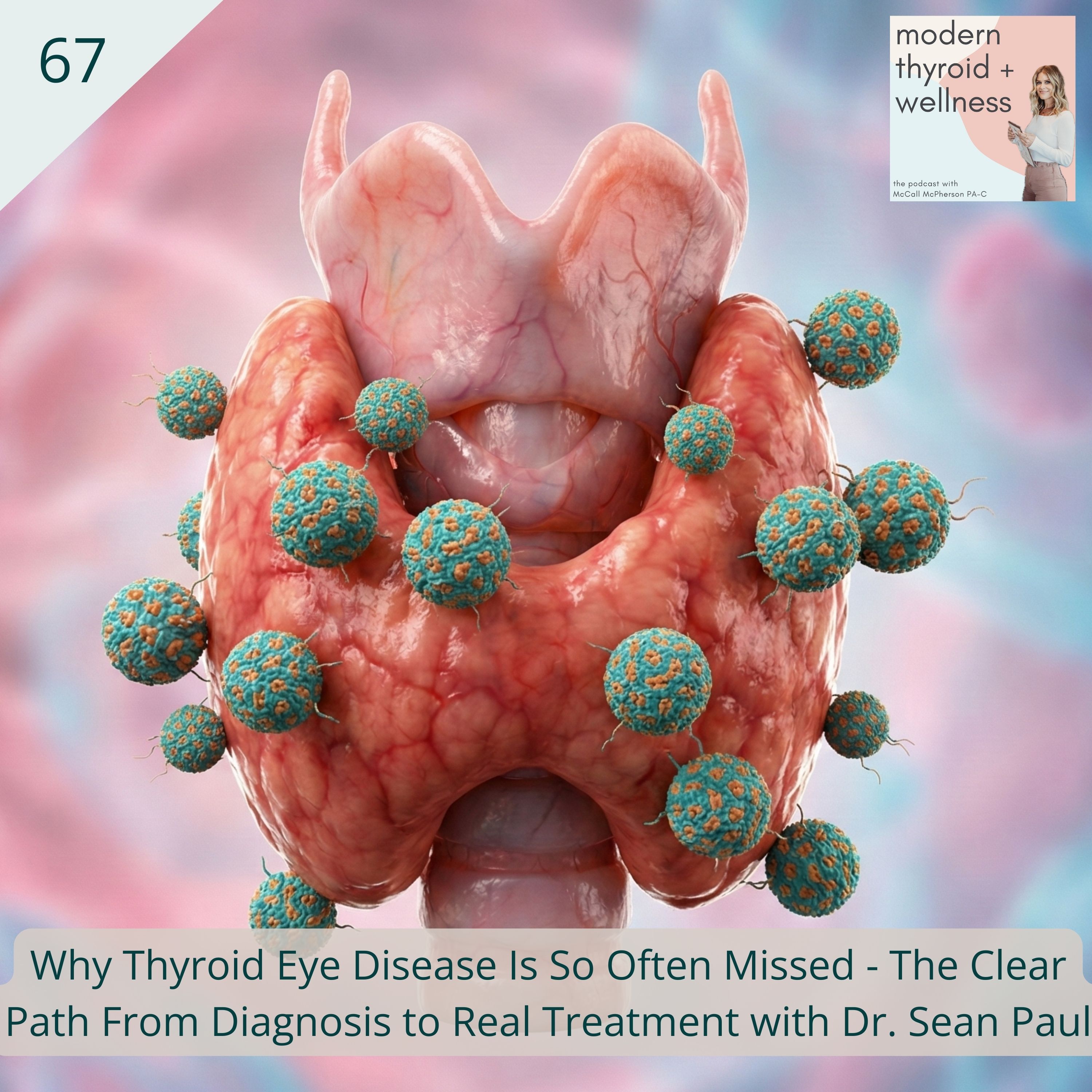
Thyroid eye disease (TED) is an autoimmune inflammatory condition that affects the tissues within and around the eye socket, including muscles, fat, and connective tissue.
Despite the name, thyroid eye disease is not caused by thyroid hormone levels alone. Instead, it occurs when the immune system mistakenly attacks receptors shared between the thyroid and orbital tissues.
TED is sometimes referred to as an autoimmune orbitopathy, meaning inflammation of the structures behind and around the eyeball.
Early symptoms are often subtle and frequently overlooked or misattributed to allergies, dry eye, or stress.
Common symptoms include:
According to Dr. Paul, many patients suffer for years before receiving an accurate diagnosis, especially if symptoms are mild or intermittent at first.
No.
While the majority of patients with TED have Graves’ disease, thyroid eye disease:
This is why Dr. Paul emphasizes that TED should be evaluated as its own immune-driven condition, not just a thyroid complication.
Thyroid eye disease requires evaluation by clinicians who understand both eye anatomy and autoimmune inflammation.
Dr. Paul is trained in oculoplastic and orbital surgery, a subspecialty focused on:
This expertise is essential for:
Treatment depends on whether the disease is active (inflammatory) or inactive (stable).
Used to reduce inflammation quickly but not ideal for long-term use due to side effects such as:
Sometimes used to slow inflammation in select cases, particularly when steroids are not tolerated.
A major advancement in TED care has been biologic medications that target specific immune pathways.
One example discussed in the episode is teprotumumab, an IV medication that blocks the IGF-1 receptor involved in thyroid eye inflammation. Dr. Paul explains that while results can be significant, careful screening and monitoring are essential due to known side effects, including potential hearing changes.
Surgery may be required when:
Dr. Paul emphasizes that timing matters. Surgery is most effective when inflammation is controlled and disease activity is stable, except in vision-threatening emergencies.
Beyond physical symptoms, thyroid eye disease can deeply affect self-image and mental health.
Patients often report:
A major goal of treatment is not only preserving vision but also restoring confidence and helping patients feel like themselves again.
Dr. Paul also discusses how modern eye and facial procedures are shifting toward:
Importantly, he notes that overall health, nutrition, and inflammation control play a major role in how the skin and eyes age, especially for patients with autoimmune disease.
Can thyroid eye disease go away on its own?
In some cases, inflammation may burn out over time, but structural changes often remain without treatment.
Does controlling thyroid labs cure TED?
No. While important, normal thyroid labs do not guarantee improvement in eye disease.
Is surgery cosmetic or medical?
It can be both. Some surgeries are medically necessary to protect vision, while others restore function and appearance after disease stabilization.
Is treatment individualized?
Yes. There is no one-size-fits-all approach. Effective care depends on disease stage, severity, and patient goals.
Thyroid eye disease is complex, but it is treatable.
With earlier recognition, the right specialists, and a personalized plan, patients no longer need to accept eye changes as inevitable. Modern medicine offers real solutions that protect vision, restore appearance, and improve quality of life.
If you suspect thyroid eye disease or have ongoing eye symptoms with a thyroid condition, seek evaluation from clinicians experienced in both autoimmune disease and orbital health.
🎧 To hear the full conversation with Dr. Sean Paul, listen to this episode of Modern Thyroid and Wellness.