For decades, women were told that the best way to stay fit through midlife was to do more cardio, eat less, and push harder. But for women navigating menopause, that advice often backfires, leading to fatigue, injuries, stalled progress, and frustration.
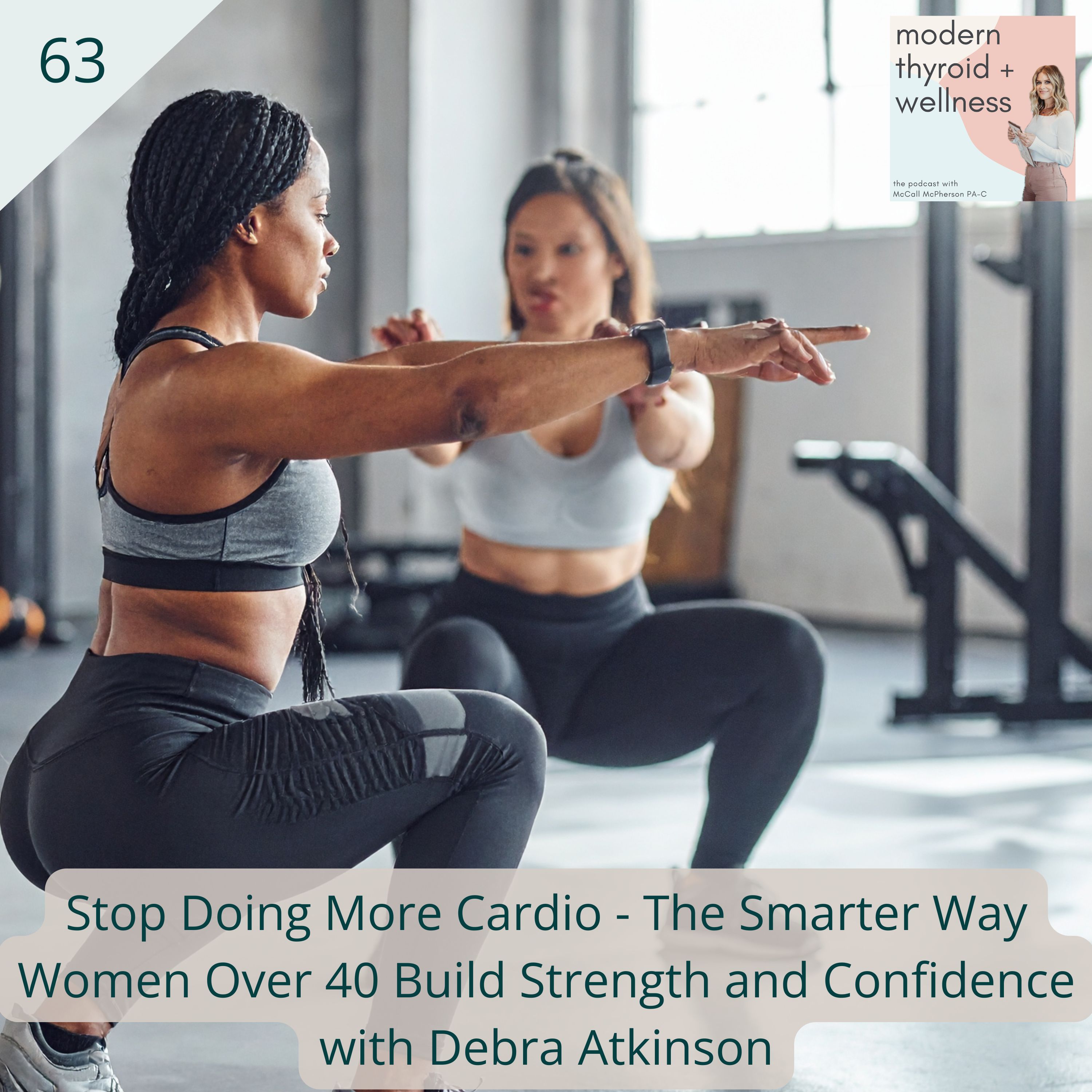
In a recent episode of Modern Thyroid and Wellness, McCall McPherson sits down with Debra Atkinson, a leading expert in fitness for women over 40, to unpack what actually works for women during menopause and beyond. The conversation reframes movement as a tool for longevity, strength, and independence rather than weight loss or punishment.
The takeaway is clear: menopause does not mean decline. It means adaptation.
During menopause, women experience shifts in estrogen, progesterone, and testosterone. These changes affect how the body builds muscle, maintains bone density, recovers from exercise, and regulates metabolism.
What used to work in your 20s and 30s often stops working entirely. In fact, doing more of the same can increase inflammation, elevate cortisol, and raise injury risk.
Debra emphasizes that menopause requires a smarter approach, not a harder one.
One of the most important messages from this episode is that strength training is foundational for women in midlife.
As estrogen declines, women naturally lose muscle mass and bone density. Without resistance training, this loss accelerates, increasing the risk of osteoporosis, fractures, metabolic slowdown, and loss of independence later in life.
Strength training helps:
This is not about lifting heavy for ego. It is about training progressively and intentionally to support the body’s changing needs.
Many women respond to menopausal weight gain or fatigue by adding more cardio. According to Debra, this is one of the most common mistakes.
Excessive cardio without strength training can:
Cardio still has a place, but it should support strength training, not replace it. Walking, cycling, and gentle aerobic work can complement resistance training when used strategically.
Bone density does not improve through supplements alone. Bones respond to mechanical load.
Debra explains that bone-loading exercises like resistance training, impact work when appropriate, and even vibration platforms can stimulate bone remodeling and strength.
Yoga and balance-based movement also play an important role, supporting posture, joint stability, and fall prevention.
The goal is not extreme workouts. It is consistent, targeted movement that challenges the body safely.
Many fitness programs are designed for younger bodies or male physiology. They do not account for hormonal transitions, recovery needs, or joint considerations common during menopause.
Debra stresses the importance of working with trainers or programs that understand:
A knowledgeable guide can make the difference between sustainable progress and burnout.
This episode reframes menopause as a powerful opportunity to rebuild strength, protect long-term health, and redefine what fitness looks like.
With the right approach, women can:
Movement during menopause is not about shrinking the body. It is about fortifying it.
Menopause does not take strength away. Ignoring how the body changes does.
When women are given accurate information, supportive strategies, and permission to train differently, they do not fade into midlife. They rise into it stronger than ever.