Modern medicine is exceptionally good at responding to emergencies and treating disease once it appears. What it often struggles with is helping people stay healthy, energetic, and functional long before illness takes hold. That gap is where Dr. Chris Renna, founder of LifeSpan Medicine, has focused his work for more than three decades.
In a recent episode of the Modern Thyroid and Wellness, Dr. Renna shared how his early years in conventional family practice led him to rethink the goals of medicine itself. Rather than simply managing diagnoses, he began asking a different question: how do we preserve function, independence, and quality of life as we age?
This article distills the key ideas from that conversation and translates them into practical insights for anyone interested in longevity that actually feels good to live.
One of the earliest lessons Dr. Renna learned was that lasting health change does not come from authority alone. In traditional models, patients are often conditioned to defer completely to the physician. Dr. Renna found that this dynamic limited progress.
His solution was to intentionally dismantle the hierarchy and replace it with partnership.
Health works best when it is something you do with your clinician, not something done to you.
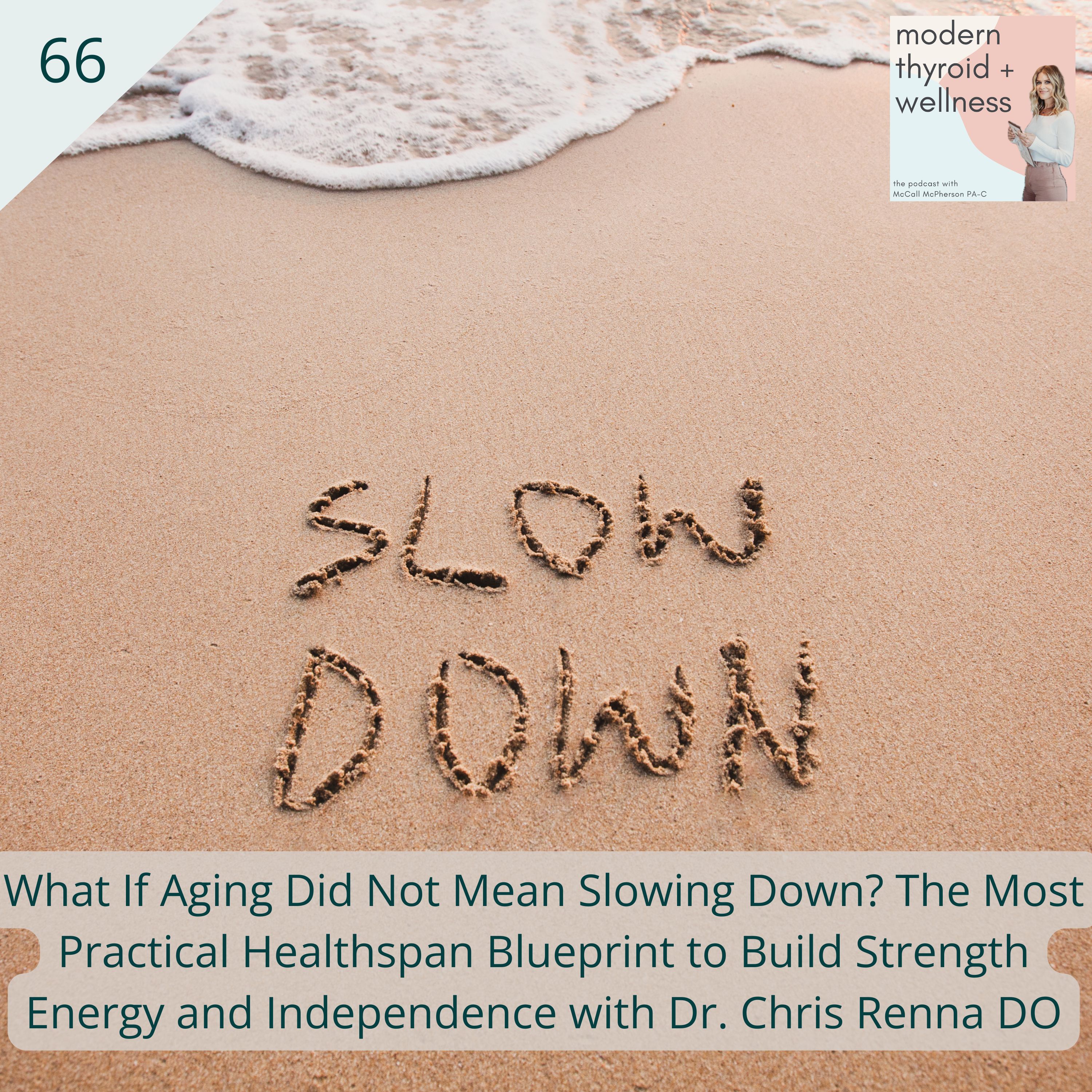
Dr. Renna makes a clear distinction between lifespan and healthspan.
Aging, in his framework, is largely the gradual loss of function over time. Preventive and lifestyle-based care aim to slow that loss as early as possible.
He illustrated this with a real patient example: an 82-year-old man who rebuilt strength using simple home exercises and now performs daily pushups. Not because he is training for a record, but because maintaining strength preserves freedom.
Across decades of practice, Dr. Renna has found that most people seeking care want the same thing: more energy. Restoring energy usually requires addressing several core inputs at once.
Because modern food systems often lack the nutrient density they once had, Dr. Renna commonly discusses foundational supplementation, including:
These are not shortcuts, but supports layered on top of real food.
Exercise does not need to be extreme to be effective.
The goal is not athletic performance. The goal is preserving function for later decades.
Sleep is one of the most under-protected aspects of health.
Dr. Renna referenced research showing that even elite athletes require over seven hours of sleep for full recovery. For most adults, spending enough time in bed to allow roughly seven and a half hours of sleep supports hormone balance, immune function, and energy.
The body thrives on rhythm. Consistency in meals, movement, sleep, and even mindset helps regulate energy and stress.
Dr. Renna encourages:
Learning to say a thoughtful, respectful no is often a health intervention.
Advanced testing can be helpful, but Dr. Renna cautions against assuming that more data automatically leads to better health.
Lab results must be interpreted in context. Hormones, immune function, lifestyle patterns, and symptoms all interact. This is especially important during midlife, when hormonal rhythms naturally shift.
He noted that the most noticeable acceleration of functional decline often occurs between ages 45 and 55, making early, individualized intervention particularly valuable.
While lifestyle remains the foundation, the conversation also explored newer therapies. Dr. Renna was careful to frame these as evolving tools rather than guarantees.
Topics discussed included:
A recurring theme was accessibility. Dr. Renna believes many of these tools will become more widely available as their preventive value becomes clearer.
Dr. Renna’s work reflects a broader shift in medicine toward collaboration, personalization, and prevention. The goal is not to chase every new therapy, but to build a strong foundation that allows advanced tools to be used wisely when appropriate.
Healthspan is not about extremes. It is about steady habits, informed choices, and respecting the body’s need for rhythm.
The question is not simply how long we live, but how well we are able to live along the way.
To learn more about Dr. Renna’s work, visit:
https://www.lifespanmedicine.com/