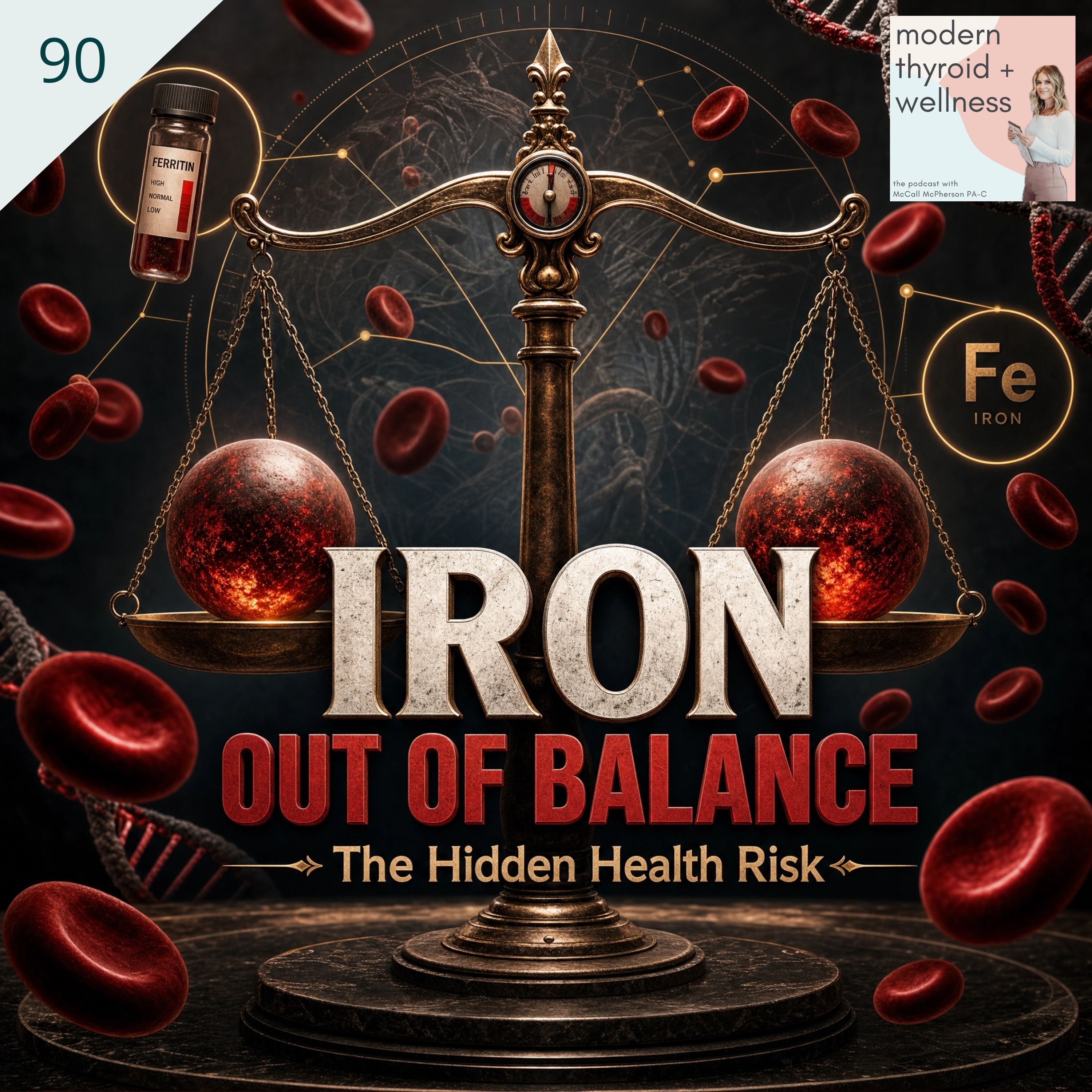
What if one of the most overlooked causes of fatigue, joint pain, thyroid dysfunction, and even heart disease wasn't iron deficiency, but iron overload?
In this episode of Modern Thyroid and Wellness, McCall McPherson welcomes Christy Sutton, chiropractor, functional medicine clinician, educator, and author of The Iron Curse. Inspired by her husband's diagnosis with hereditary hemochromatosis, Dr. Sutton has dedicated her work to helping patients recognize and address iron overload before it leads to serious long-term health complications.
Together, McCall and Dr. Sutton explore why hereditary hemochromatosis is far more common than many people realize, why millions of people may unknowingly carry high-risk genes, and how excess iron can silently damage the liver, heart, pancreas, brain, thyroid, and other organs. McCall also shares her own personal experience with iron overload, walking through her lab work live during the episode while Dr. Sutton explains what the results reveal and why early detection can make all the difference.
Whether you're experiencing unexplained fatigue, elevated ferritin, thyroid issues, or have a family history of iron overload, this episode offers practical guidance on testing, treatment, and understanding one of the most underdiagnosed conditions in modern medicine.
🔑 Key Topics Covered
🩸 Iron Overload Is More Common Than Most People Think
When most people think about iron, they think about deficiency.
But according to Dr. Sutton, hereditary hemochromatosis affects far more people than many realize, with a significant portion of the population carrying one or more HFE gene variants that can increase iron absorption.
Because the body has very limited ways to eliminate excess iron, levels can gradually increase over decades, especially after menstruation ends or blood loss decreases.
🧬 Why Excess Iron Can Damage the Entire Body
Iron is essential for life, but too much can become harmful.
Dr. Sutton explains that excess iron contributes to oxidative stress, allowing iron to accumulate within tissues where it may damage organs over time.
Areas commonly affected include:
Because this process develops slowly, many people don't recognize the problem until significant health issues appear.
👩 Why Women Often Don't Develop Symptoms Until Midlife
Premenopausal women naturally lose iron through monthly menstrual cycles.
As a result, many women remain protected from iron accumulation for years.
However, after menopause, hysterectomy, uterine ablation, or other situations that reduce menstrual blood loss, iron levels may begin rising much more rapidly.
McCall shares her own experience of seeing her iron markers increase after uterine ablation, creating an opportunity to discuss how these laboratory changes may appear before significant symptoms develop.
🩺 Looking Beyond a Single Lab Value
One of the most educational moments of the episode comes when Dr. Sutton reviews McCall's laboratory results in real time.
She explains why evaluating multiple markers together provides a more complete picture, including:
Because ferritin can rise with both inflammation and excess iron, understanding the broader laboratory context becomes essential when determining the underlying cause.
❤️ Iron Overload and Heart Health
The discussion also explores the relationship between excess iron and cardiovascular health.
According to Dr. Sutton, elevated iron may contribute to oxidative stress that damages blood vessels and promotes inflammation.
Over time, this process may play a role in plaque formation and increase cardiovascular risk in susceptible individuals.
McCall also shares the personal story of losing her brother unexpectedly to a heart attack, highlighting why this topic carries such deep personal significance for her family.
💉 Treatment Starts by Reducing Iron
The primary treatment for hereditary hemochromatosis involves removing excess iron through therapeutic phlebotomy or blood donation when medically appropriate.
By removing blood, the body uses stored iron to produce new red blood cells, gradually lowering overall iron stores.
Dr. Sutton explains that treatment plans should always be individualized and that blood removal is not appropriate for everyone.
🥩 Everyday Habits That Influence Iron Levels
In addition to therapeutic blood removal, lifestyle choices can influence iron absorption.
Dr. Sutton discusses strategies such as:
She also discusses compounds such as curcumin, green tea extract, quercetin, and alpha-lipoic acid that are being studied for their role in supporting healthy iron regulation.
🌟 Final Takeaway
Iron deficiency deserves attention, but so does iron overload.
Because hereditary hemochromatosis often develops silently over many years, understanding your genetics, reviewing your laboratory markers, and paying attention to family history may help identify problems before long-term complications develop.
As Dr. Sutton explains throughout this conversation, awareness is one of the most powerful tools we have.
Early testing, thoughtful interpretation of laboratory results, and individualized treatment can help protect long-term health while preventing unnecessary organ damage.
👤 About the Guest
Christy Sutton is a chiropractor, functional medicine clinician, educator, and author specializing in genetics, iron metabolism, and chronic disease prevention. Inspired by her husband's diagnosis with hereditary hemochromatosis, she developed educational resources to help patients and practitioners better understand iron overload, genetic risk factors, and root-cause approaches to long-term health.
🔗 Resources & Links
📖 The Iron Curse by Dr. Christy Sutton
The Iron Curse Book
🎓 The Iron Curse Educational Workshop
The Iron Curse Workshop
🌐 Website:
Dr. Christy Sutton
📸 Instagram:
Dr. Christy Sutton Instagram
🎵 TikTok:
Dr. Christy Sutton TikTok
💼 LinkedIn:
Dr. Christy Sutton LinkedIn
📲 Follow McCall McPherson & Modern Thyroid and Wellness
💻 Website: modernthyroidclinic.com
🐦 X / Twitter: @thyroidexpert
🌐 Host Website: mccallmcpherson.com
📺 YouTube: McCall McPherson Channel
📘 Facebook: McCall McPherson PAC
📸 Instagram: @mccallmcphersonpa